Frequently Asked Questions
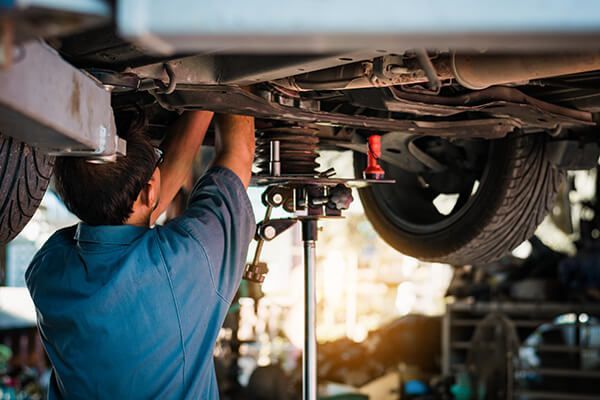
What kinds of preventative maintenance services do you recommend to make my car last longer?
Having your oil changed regularly and your vehicle inspected by a qualified technician is one of the most important things you can do to increase the life of your car.
My car is making a funny noise, can you tell me what’s wrong with it?
Schedule an online appointment, or give us a call. Every car, truck, and SUV is a complex machine with various symptoms for many issues. We will likely need to see your vehicle before making a complete diagnosis.
What does an oil change cost?
There are several factors when quoting a price for an oil change, (Number of cylinders, type of oil, vehicle manufacturer), give us a call so we can provide an accurate estimate. We also perform wheel alignments, brake repairs, battery replacement, AC repairs, shock/strut replacement, check engine light diagnoses, and much more!
How often should I rotate my tires?
Most manufacturers recommend that your tires should be rotated every other oil change or every 6000-10,000 miles. Neglecting to rotate tires is a major cause of premature tire wear.
Is it really necessary to replace my timing belt at the recommended interval?
YES. The failure of a timing belt in many cars can result in major engine damage. The cost of repairing an engine with a broken timing belt is much greater than the cost of a timing belt replacement.
What does it mean if my “check engine” or “service engine soon” light comes on?
There are many sensors and computerized components that manage your vehicle’s engine performance and emissions. When one of these fails, the “check engine” light is illuminated. Although your car may seem to run fine, it is important to have the issue addressed to prevent long-term problems.
What should I do if my car starts to overheat?
This is a very serious problem – if your car overheats for too long, you can damage your engine. As soon as possible, find a safe place to pull off the road and shut the engine off! Do not attempt to check the fluid level in the radiator; the hot fluid can cause severe burns. The best thing to do is have your car towed to the nearest, trusted auto repair facility, like us!
When should I change my spark plugs?
For maximum fuel economy and peak engine performance, most manufacturers recommend your spark plugs should be replaced every 30 months or 30,000 miles, unless your vehicle is equipped with 100,000-mile platinum-tipped spark plugs.
How often should I change my air filter?
To keep your engine free of debris, dust, and dirt, we recommend getting your air filters replaced every 15,000 to 30,000 miles or as recommended in your vehicle’s owner’s manual. We also do oil changes, wheel alignments, brake repairs, battery replacement, AC repairs, shock/strut replacement, check engine light diagnoses, and much more!
Can you do the repair I need?
We are a full-service auto repair facility so are able to perform almost any auto repair or service you might need. Oil changes, wheel alignments, brake repairs, shock/strut replacement, battery replacement, AC repairs, check engine light diagnoses, and much more!
Questions to Ask Your Frontline Automotive Service Advisor
A lot of service and repair customers in Fairbanks are a little tentative when they talk with their automotive advisors. They want to ask questions but don't want to be embarrassed or to seem pushy. Cars are very complicated and there's more to know about them than most of us Fairbanks drivers have the time to learn. At Frontline Automotive, we think automotive service customers have a right to ask any question they need to understand what is wrong with their vehicle and what it will take to fix it. They need to feel free to ask the cost and benefits of recommended services. And they certainly have a right to understand the financial end of the transaction. It's all about the communication. What are some of the barriers to communication? Well, most Frontline Automotive service advisors are very busy trying to service and fix cars to get Fairbanks drivers back on the road. So, just ask when you feel you need more information. Financial related issues seem to be most frustrating to Fairbanks customers. If you're not sure, ask what the auto repair payment policies are. For example, there's a big difference between giving your vehicle a quick once over and doing a thorough inspection. Diagnosing a problem may take quite a while for your friendly and knowledgeable Frontline Automotive technician. Make sure you know what's done as a courtesy and what has a fee. Remember, you still have to pay for the office visit even if the doctor says you only have a cold. Communication is a two way street. If you have some real budget concerns, ask your friendly and knowledgeable service advisor what he can do. He can give you priorities and options. He can tell you what needs to be taken care of right away for safety or financial reasons. Then you can work out a plan for when to get the rest done. He can also help you with options on the parts. The preference is to always use a high-quality part with a reputation for reliability. But if money is real tight, he might be able to find rebuilt auto parts or a used part. He should tell you the difference in the guarantee for the part so you can make a good decision. Ask about Frontline Automotive warranties for car parts and labor. Be sure to get all the paperwork you need to make a possible claim in the future. At Frontline Automotive in Fairbanks, we stand behind our work and want you to understand precisely what that means. Be sure to ask for and keep a detailed explanation of all the work that's done on your vehicle. These records will help you keep track of service, warranties and document the good care your vehicle has received at Frontline Automotive when the time comes to sell it.